📅 Category: Car Spotlights | By: Clyde Motors KE | ⏱ 6 min read
We have covered the 70 Series across multiple posts in this series — the V8-to-four-cylinder engine transition in detail in Blog #112, the single cab commercial application in Blog #228, and the broader Land Cruiser family in our Prado and Land Cruiser 300 coverage. But the 70 Series double cab — specifically the 79 Series pickup that represents the family’s most widely used variant in Kenya — deserves its own comprehensive examination as a complete vehicle in its current specification rather than simply as a comparison or engineering reference point.
The Toyota Land Cruiser 79 Series double cab is, without qualification, the most capable production pickup truck available in Kenya’s market. Understanding precisely why that statement is true — and for which buyers it translates into the right purchasing decision — is the purpose of this post.
What Separates the 79 Series From Every Other Pickup in Kenya
Kenya’s pickup truck segment contains excellent vehicles. The Toyota Hilux — covered in detail in Blog #54 and Blog #124 — is Kenya’s most trusted working pickup. The Nissan Navara — examined in Blog #227 — offers independent rear suspension and twin-turbo refinement. The Mitsubishi L200 Triton covered in Blog #118 delivers Super Select AWD sophistication. Each of these vehicles is genuinely capable and genuinely appropriate for specific buyer needs.
The 79 Series double cab operates in a different category from all of them — not merely as a more expensive or more premium version of the same vehicle type, but as a fundamentally different proposition whose capability characteristics, durability credentials, and operational reliability in extreme conditions are not matched by any of the lighter pickup platforms.
The distinction comes from the 79 Series’ body-on-frame construction using a dedicated Land Cruiser-specific ladder frame rather than a platform shared with a passenger vehicle range. The Hilux, Navara, and Triton all use platforms developed for the mid-size commercial pickup segment — platforms that balance capability with cost, weight, and multi-market application requirements. The 70 Series platform was developed exclusively for maximum off-road capability, maximum durability in extreme conditions, and maximum operational reliability in environments where failure is genuinely life-threatening — not as a secondary consideration after passenger comfort or fuel efficiency.
The Platform — Forty Years of Continuous Refinement
The Toyota Land Cruiser 70 Series platform has been in continuous production since 1984 — an unbroken production run that is genuinely extraordinary in modern automotive manufacturing. This longevity is not commercial inertia but a specific engineering statement: the platform works. It has been proved across four decades of continuous operation in the world’s most demanding environments — military operations, UN peacekeeping missions, humanitarian deployments, mining operations, and agricultural use across every continent where extreme terrain and remote location create conditions that expose a vehicle’s true character.
The solid front and rear axles that define the 70 Series’ off-road architecture — a configuration abandoned by most modern vehicles in favour of independent suspension — provide the wheel articulation, the durability under extreme loading, and the mechanical simplicity that make the platform uniquely capable in situations where independent suspension’s benefits become disadvantages.
When one wheel articulates significantly upward on a large rock or drops into a deep rut, a solid axle maintains the opposite wheel’s contact with the ground more effectively than independent suspension’s geometry allows in extreme situations. For the technical off-road use cases that define the 70 Series’ operational brief — steep rocky climbs, deep sand crossings, heavily loaded river fords — this articulation advantage over independent suspension alternatives is real and practically significant.
The 2.8L Four-Cylinder — Current Specification Fully Examined
As we covered comprehensively in Blog #112, the 79 Series has transitioned from the legendary 4.5L V8 to the current 2.8L 1GD-FTV four-cylinder diesel. The complete analysis of that transition — including the honest acknowledgement of what is lost alongside what is gained — remains in Blog #112. For buyers who have not read that post, it is essential reading before any 70 Series purchase decision.
For this examination, the focus is on the current specification’s day-to-day operational character in Kenya’s specific conditions.
In Nairobi’s traffic: The six-speed automatic’s smooth operation makes the 79 double cab significantly more liveable in Nairobi’s stop-start conditions than the previous manual-only configuration. Buyers who commute through Nairobi in their 79 Series report that the automatic transmission’s availability has transformed the vehicle’s urban character — it is still a large, imposing presence in city traffic, but it no longer demands the physical effort of constant clutch work that the manual required.
On Kenya’s highways: The 2.8L’s 500Nm of torque provides confident highway cruising at Kenya’s legal speeds with the load capacity that defines the 79 Series’ commercial appeal. Highway overtaking is deliberate rather than effortless — the four-cylinder’s narrower power band compared to the V8 requires more planning for sustained highway speed passing — but it is entirely adequate for normal highway use.
In genuine off-road conditions: This is where the 79 Series’ character asserts itself most completely. In low range with the locking differentials engaged, the 2.8L four-cylinder’s 500Nm — available from a lower RPM than the V8’s 430Nm but with a different delivery character — provides pulling power that no mid-size pickup in Kenya’s market can approach. The combination of the Land Cruiser platform’s wheel articulation, the locking differentials’ guaranteed torque to all four wheels regardless of traction conditions, and the 500Nm available in low range creates a capability profile that defines the word “unstuck” in any terrain Kenya presents.
Payload and Towing — The Commercial Case
As established in Blog #228 covering the single cab, the 79 Series double cab’s payload capacity significantly exceeds mid-size pickup alternatives. The double cab configuration’s 1.0 to 1.2-tonne rated payload — slightly below the single cab’s extraordinary 1.38 tonnes but still above most double cab competitors — combined with Toyota’s genuine 3,500kg braked towing capacity creates a vehicle whose commercial credentials are unmatched in the pickup segment.
For Kenya’s agricultural buyers who move livestock, heavy produce, or farm equipment; for construction operators who transport materials to remote sites; for businesses that tow substantial trailers; and for any buyer whose operational requirement genuinely pushes toward the 79 Series’ payload ceiling regularly — no alternative in Kenya’s pickup market provides equivalent capability at any price.
The Locking Differentials — Understanding Their Operational Significance
The 79 Series double cab in 4WD specification is available with locking rear differential and, on specific variants, locking front differential as well. These mechanical locking differentials are the most important off-road technology fitted to any vehicle in Kenya’s market — more important than any electronic traction control system, more important than any electronic AWD torque distribution, and more important than any terrain management mode.
A locking differential mechanically couples both wheels on an axle to rotate at the same speed regardless of traction conditions — even if one wheel has zero traction, the differential forces the other wheel to receive 100% of the available torque. Electronic traction control systems simulate this behaviour through brake application, but mechanical locking is faster, more absolute, and continues to function when electronic systems reach their limits.
In the extreme off-road situations that define the 79 Series’ operational environment — crossing a steep slope where one wheel is completely unloaded, navigating a deep mud hole where wheel-to-surface friction approaches zero on multiple axles simultaneously, or recovering from a stuck position where both wheels on an axle have lost traction — the mechanical locking differential’s guaranteed torque delivery is the difference between forward progress and requiring external recovery.
The 79 Series in Kenya’s NGO and Commercial Fleet Context
Kenya hosts one of Africa’s largest concentrations of NGO and humanitarian organisations — the UN system, Red Cross, MSF, World Vision, and hundreds of smaller entities operate vehicle fleets that regularly access remote northern Kenya, pastoralist areas in Marsabit and Turkana counties, and development project sites in areas where road infrastructure ranges from poor to non-existent.
The Toyota Land Cruiser 79 Series is the dominant vehicle in these fleets for documented operational reasons. Parts can be sourced from Toyota Kenya’s distribution network, which reaches major towns throughout the country. Mechanics who understand the platform exist in towns that would not know how to approach a Navara’s twin-turbo system or a Mitsubishi’s Super Select AWD. The platform’s mechanical simplicity — compared to the electronic complexity of modern crossovers and even some pickup alternatives — means field repairs are possible with basic tools and a competent mechanic in locations where sophisticated diagnostic equipment is unavailable.
For NGO procurement managers evaluating fleet vehicles for remote northern Kenya operations, this combination of capability, parts availability, and field-repair simplicity makes the 79 Series effectively the only rational choice regardless of what alternative platforms offer on paper.
Who Should Buy the 79 Series Double Cab and Who Should Not
Buy the 79 Series double cab if: Your operations genuinely require the payload capacity, towing capability, or extreme off-road capability that exceeds what mid-size pickups provide. You operate in areas remote enough that field-repair simplicity is a genuine operational requirement. You understand the 70 Series’ character — its size, its fuel consumption at 11–13km/L, its firm ride quality on tarmac — and accept these as the price of its extraordinary capability.
Consider alternatives if: Your use is primarily urban and the 79 Series’ large footprint, fuel consumption, and firm ride quality create daily friction without the off-road capability being regularly accessed. Your payload requirements are within what the Hilux or Navara comfortably provide. Your budget would require choosing between a well-maintained mid-size pickup and a marginal condition 70 Series — the former is almost always the better choice in this specific comparison.
The Bottom Line
The Toyota Land Cruiser 79 Series double cab is the most capable production pickup truck available in Kenya’s market — a vehicle whose forty years of continuous production, genuine field-proved reliability in the world’s most demanding environments, and mechanical design philosophy aimed entirely at operational capability rather than commercial compromise create something that no mid-size pickup alternative approaches in its specific strengths. For the buyers whose operational requirements genuinely call for what the 79 Series offers, there is no substitute. For buyers whose requirements are served by capable mid-size alternatives, the 79 Series’ specific character creates unnecessary daily costs without corresponding benefit. Understanding which category you occupy is the beginning and the end of the 79 Series buying decision.
👉 Ask about Toyota Land Cruiser 70 Series availability at clydemotors.co.ke or WhatsApp us on 0740635621. Financing available.
Related Vehicles
TOYOTA FIELDER wxb
Stylish, Efficient & Perfect for Everyday Driving The Toyota Corolla Fielder WXB is the perfect combination of practicality, fuel efficiency, comfort, and sporty styling. Designed for drivers who want reliability with a premium touch, the…
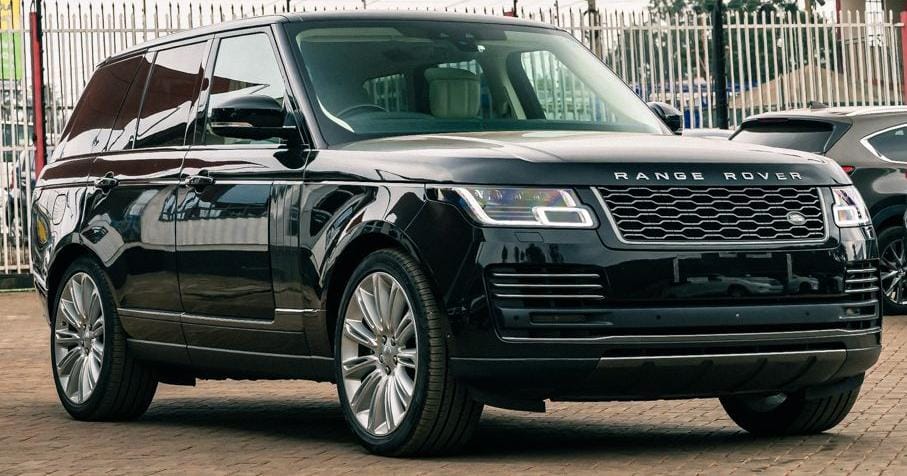
2019 Range Rover Vogue Autobiography 4.4L SDV8 – Luxury, Power & Prestige
Experience refined British luxury and commanding performance with this 2019 Range Rover Vogue Autobiography, finished in elegant Black and powered by a powerful 4.4L SDV8 Diesel engine. With low mileage, this premium 4WD SUV combines…
2018 VOLKSWAGEN ARTEON
The 2018 Arteon is Volkswagen’s stylish flagship fastback that replaced the CC. It blends coupe looks, sedan comfort, and hatchback practicality — aiming at premium rivals without their full price tag. 5-door fastback Engine options:…