
📅 Category: Maintenance & Care | By: Clyde Motors KE | ⏱ 6 min read
The Mazda CX-5 has earned a devoted following among Kenyan buyers who value driving dynamics, interior quality, and a vehicle that stands apart from the Toyota-dominated mainstream. As covered in Blog #35, it is one of the most underappreciated crossovers in Kenya’s used import market. But owning a CX-5 well requires specific knowledge — the SKYACTIV engine family has particular requirements, and Mazda’s engineering philosophy produces a vehicle that rewards attentive maintenance in ways that become immediately apparent in ownership quality and longevity. This is the definitive CX-5 ownership guide for Kenya.
Understanding the SKYACTIV Engine — The Heart of the CX-5
The CX-5’s defining technical achievement is its SKYACTIV-G petrol engine — available in 2.0L and 2.5L variants in Kenya’s used import market. The engine’s extraordinarily high compression ratio — 13:1 or 14:1 depending on the generation — is the source of its efficiency advantage but also creates specific maintenance requirements.
Why the high compression ratio matters for maintenance: At these compression ratios, the engine’s management system relies on perfectly timed, correctly formulated combustion to avoid pre-ignition and detonation. This sensitivity means fuel quality and oil specification are more consequential in the SKYACTIV engine than in lower-compression alternatives.
Oil specification: Use 0W-20 full synthetic oil for all SKYACTIV-G engines. This specification is not a recommendation — it is a requirement. The engine’s internal clearances and the SKYACTIV architecture’s specific lubrication requirements are designed around 0W-20 viscosity. Using a thicker oil reduces the efficiency gains the SKYACTIV design is built around and creates higher operating pressures in circuits designed for the lower-viscosity specification.
Change interval in Kenya: Despite Mazda’s official recommendation of 10,000km to 15,000km with full synthetic, Kenya’s conditions demand a more conservative approach. Change every 7,500km or 5 months — whichever comes first. Nairobi’s stop-start traffic, dust, and heat accelerate oil degradation faster than the Japanese driving conditions the official interval was designed for.
Fuel Quality — The SKYACTIV Engine’s Critical Dependency
The high compression ratio that makes the SKYACTIV engine efficient also makes it more sensitive to fuel quality than lower-compression alternatives. The engine’s management system uses knock sensors to detect pre-ignition and retard timing when it occurs — but sustained operation on poor-quality fuel forces the system into a permanently retarded timing state that reduces power output and efficiency to below what a lower-compression engine achieves on the same fuel.
Use 95 octane fuel where available. Mazda’s SKYACTIV-G engine is rated for 91 octane as a minimum but performs most efficiently on 95 octane. At Kenyan fuel stations where 95 octane premium is available — Shell V-Power, Total Excellium — using it consistently is a worthwhile investment for the SKYACTIV engine specifically.
Use reputable fuel stations consistently. Fuel contamination — water in the fuel, poor-quality base stock — is more damaging to the SKYACTIV engine’s performance than to a conventional lower-compression unit. Establish consistent use of reputable branded stations.
The Timing Chain — The SKYACTIV’s Longevity Asset and Maintenance Dependency
The SKYACTIV-G engine uses a timing chain rather than a timing belt — a genuine longevity advantage, as chains do not require scheduled replacement. However, the chain’s longevity is entirely conditional on clean, correct-specification oil maintained at the correct interval.
The chain tensioner operates hydraulically — it uses oil pressure to maintain correct chain tension. Low oil pressure from degraded oil, incorrect viscosity, or low oil level causes the tensioner to lose its ability to maintain correct tension. A slack timing chain causes the characteristic cold-start rattle that is the first audible warning of this problem.
If you hear a rattling or ticking noise in the first few seconds after cold starting your CX-5 — a noise that disappears once oil pressure builds — take this seriously. It indicates either low oil level, degraded oil that has drained from the tensioner circuit during the engine-off period, or a failing tensioner. Investigate immediately.
The i-ACTIV AWD System — Maintenance Requirements
Many CX-5 variants in Kenya’s market feature Mazda’s i-ACTIV AWD system — the predictive all-wheel drive system described in Blog #85. This system requires specific maintenance attention to maintain its sophisticated function.
Transfer case and rear differential fluid: The i-ACTIV system uses a electronically controlled coupling and a conventional rear differential. Both require correct-specification fluid changes every 40,000km. Use Mazda-specified ATF for the AWD coupling and the correct gear oil for the rear differential — do not substitute with generic fluids.
Wheel speed sensors: The i-ACTIV system uses 27 parameters from multiple sensors to predict and manage traction. Wheel speed sensor contamination — common in Kenya’s muddy off-road conditions — can cause the AWD system to receive incorrect data and make inappropriate torque distribution decisions. Inspect and clean wheel speed sensors at every service.
Mazda’s Unique Maintenance Item — G-Vectoring Control Calibration
The G-Vectoring Control system — covered in Blog #85 — makes micro-adjustments to engine torque during cornering based on steering angle, lateral acceleration, and other parameters. This system depends on accurate data from multiple sensors.
If your CX-5’s handling feels different after a significant impact — a pothole strike, an off-road excursion, or a minor accident — have the system’s sensor calibration checked. A misaligned steering angle sensor or a wheel speed sensor providing incorrect data causes G-Vectoring to make counterproductive interventions.
Interior Care — Protecting the CX-5’s Exceptional Cabin
The CX-5’s interior quality is one of its defining strengths in Kenya’s market — the materials, ergonomics, and finish quality are notably better than most competitors. Maintaining that interior quality requires specific attention in Kenya’s conditions.
UV protection for dashboard and leather: Kenya’s intense UV radiation degrades automotive plastics and leather faster than in temperate climates. Apply a quality UV-protectant product to dashboard surfaces and a leather conditioner with UV protection to leather upholstery every three months. This prevents the cracking, fading, and brittleness that Kenya’s UV environment causes in untreated interior materials.
Air conditioning filter: The cabin air filter in the CX-5 should be replaced every 15,000km rather than the 30,000km interval appropriate for cleaner environments. Nairobi’s air quality and dust loads clog the cabin filter quickly, reducing AC performance and allowing more particulates into the cabin air than a clean filter would.
CX-5 Common Issues in Kenya — What to Watch
Infotainment system reset: Some CX-5 infotainment systems — particularly the Mazda Connect units — occasionally require a system reset after battery disconnection or voltage irregularities. This is a software issue rather than a hardware failure. If the system appears unresponsive or frozen, a full power reset (disconnecting the battery for 10 minutes) usually resolves it.
Brake dust accumulation on rear calipers: The CX-5’s rear calliper design accumulates brake dust more readily than the front. In Kenya’s dusty environment, this can cause premature calliper piston seal degradation. Have rear callipers inspected and cleaned at every brake service.
Sunroof drainage channels: CX-5 variants with panoramic sunroofs have drainage channels that can become blocked in Kenya’s rainy season. A blocked sunroof drain causes water to overflow into the headliner and A-pillar. Clear drainage channels with compressed air at the onset of each rainy season.
Finding Mazda Service Expertise in Kenya
Mazda’s service network in Kenya is growing but remains less extensive than Toyota’s. For routine servicing, an experienced general Japanese car mechanic with familiarity with SKYACTIV engines can handle most maintenance items. For more complex diagnosis and repairs — particularly AWD system issues, infotainment problems, or SKYACTIV engine management faults — seek out a mechanic who specifically lists Mazda CX-5 experience.
The SKYACTIV engine’s diagnostic requirements are best addressed with Mazda-compatible OBD diagnostic equipment that reads manufacturer-specific fault codes beyond the standard OBD-II generic set. Confirm your mechanic has this capability before any diagnostic work.
The Bottom Line
The Mazda CX-5 rewards its owners with an exceptional driving experience and interior quality that justifies its position as one of Kenya’s most interesting crossover choices. Maintaining that experience requires specific attention to oil specification, fuel quality, AWD fluid maintenance, and interior protection from Kenya’s UV environment. Get these right and the CX-5 will deliver on its considerable promise throughout your ownership.
👉 Browse our Mazda CX-5 stock at clydemotors.co.ke or WhatsApp us on 0740635621. Financing available.
Related Vehicles
The Toyota Land Cruiser FJ 2026 — The Compact Off-Roader Kenya Has Been Waiting For
📅 Category: New Releases | By: Clyde Motors KE | ⏱ 6 min read There is a reason the Toyota Land Cruiser name carries so much weight in Kenya. Decades of proven performance on some…
🚘 For Sale: 2014 Toyota Hilux Diesel Manual – Low Mileage
Looking for a reliable workhorse you can depend on? Check out this well-maintained 2014 Toyota Hilux with low mileage — a perfect blend of durability, everyday practicality, and strong resale value. 📌 Key Details Make…
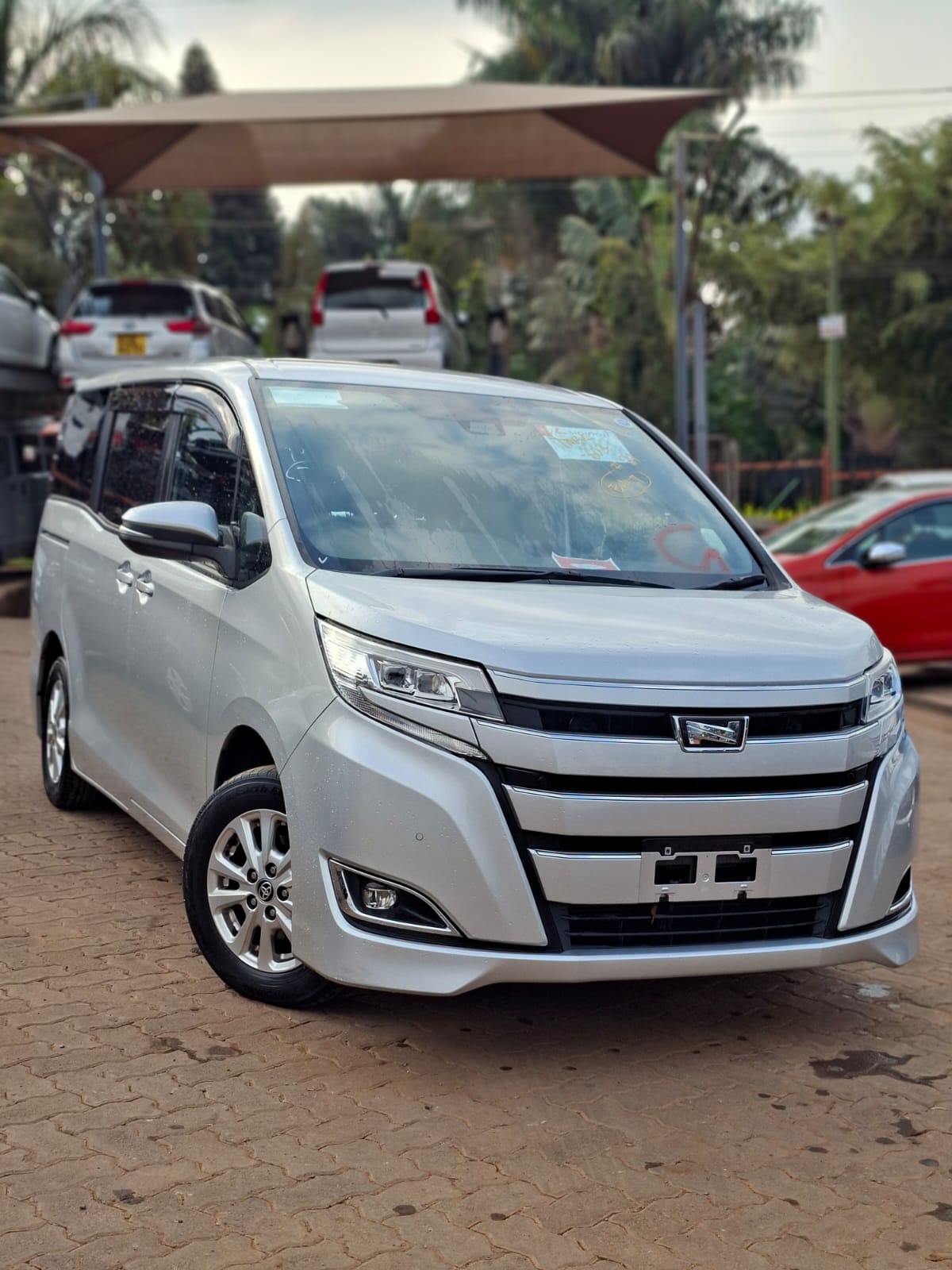
🚨🔥 2019 TOYOTA NOAH NON-HYBRID – 8 SEATER FAMILY MPV 🔥🚨
Looking for a spacious, comfortable and reliable family vehicle? The 2019 Toyota Noah Non-Hybrid is an excellent choice! 💯✨ 🚘 KEY SPECS✅ 2019 Model✅ 2000cc Petrol Engine ⛽✅ 2WD✅ Automatic Transmission✅ Low Mileage✅ 8-Seater Spacious…