
The name Land Cruiser is not just a badge—it’s a reputation built over decades. From remote African terrains to executive driveways in Nairobi, the Land Cruiser has earned a rare position: it is both a workhorse and a status symbol.
With the release of the Toyota Land Cruiser 300 Series, Toyota didn’t just upgrade a vehicle—they redefined what it means to own one in today’s world.
This is not just about a new model. It’s about evolution, responsibility, and understanding what you’re really buying into.
From the 80 Series to the 300: Why the Land Cruiser Matters
To understand the 300 Series, you need to understand its lineage.
The 80 Series built the foundation of durability.
The 100 Series introduced refinement.
The 200 Series brought power and global prestige.
Then came the 300 Series—and instead of simply adding more, Toyota made a bold decision: they changed the philosophy.
Gone is the naturally aspirated V8. In its place is a 3.3L twin-turbo V6 diesel engine.
At first, that sounds like a downgrade. It isn’t.
This engine produces:
- More torque
- Better fuel efficiency
- Faster throttle response
In real-world Kenyan driving—especially long-distance routes like Nairobi to Eldoret or off-road terrain in Narok—this translates to better control, lower fuel costs, and more consistent performance.
Toyota didn’t remove power.
They refined how it is delivered.
The TNGA-F Platform: The Real Game Changer
The biggest upgrade in the Land Cruiser 300 isn’t the engine—it’s the platform.
Toyota introduced the TNGA-F (Toyota New Global Architecture – Frame), which completely transforms how the vehicle behaves.
Compared to the 200 Series:
- The 300 Series is lighter by over 200kg (depending on spec)
- It has a lower center of gravity
- The chassis is significantly more rigid
What does that mean for you as an owner?
- Better handling on highways
- More stability on rough roads
- Reduced body roll when cornering
In simple terms:
It feels less like a heavy machine and more like a controlled, intelligent vehicle.
Interior Evolution: From Utility to Executive Lounge
Step inside the 300 Series, and you immediately notice the shift.
Previous Land Cruisers were built to last.
This one is built to impress and protect comfort.
You get:
- Premium leather finishes
- Larger infotainment displays
- Advanced driver-assist systems
- Improved sound insulation
For Kenyan buyers, this matters more than ever.
Why?
Because the Land Cruiser is no longer just used for off-road adventures—it’s used for:
- Business meetings
- Long-distance family travel
- Executive transport
The 300 Series adapts to all of these roles seamlessly.
Off-Road Capability: Still the King?
Short answer: yes.
But the way it delivers that capability has changed.
The 300 Series introduces:
- Multi-Terrain Select (improved responsiveness)
- Crawl Control (more refined than previous generations)
- Electronic Kinetic Dynamic Suspension System (on select trims)
What used to require experience and skill is now supported by intelligent systems.
That doesn’t make it weaker.
It makes it more accessible and more precise.
For Kenyan terrain—whether it’s construction sites, rural access roads, or safari routes—this matters.
Maintenance Reality: What Most Owners Get Wrong
Here’s where most people make a mistake.
They assume that because it’s a Land Cruiser, it can “handle anything.”
That’s true—but only if you respect the engineering.
1. Oil Changes Are Not Optional Timing
With a twin-turbo engine, oil quality is everything.
Recommended:
- Every 5,000–8,000 km in Kenyan conditions
Why?
Heat, dust, and driving patterns in Kenya are harsher than factory assumptions.
2. Fuel Quality Directly Affects Longevity
Modern diesel engines use high-pressure fuel systems.
Dirty fuel leads to:
- Injector failure
- Reduced performance
- Expensive repairs
Always fuel at trusted stations.
3. Suspension Wear Happens Faster Than You Think
Even with improved design, Kenyan roads are unforgiving.
Check regularly:
- Bushings
- Shock absorbers
- Control arms
Ignoring this leads to:
- Poor ride quality
- Uneven tire wear
- Reduced safety
4. Electronics Require Proper Diagnostics
The 300 Series is a computer on wheels.
Random mechanics guessing issues?
That’s how small problems become big ones.
Use proper diagnostic tools. Always.
Ownership Mindset: This Is Where Value Is Created
Owning a Land Cruiser 300 is not about buying a car.
It’s about managing an asset.
A well-maintained unit:
- Retains value
- Performs consistently
- Costs less over time
A poorly maintained one:
- Becomes unreliable
- Loses resale value
- Drains money unexpectedly
The difference is not the car.
It’s the owner.
Is the Land Cruiser 300 Worth It in Kenya Today?
If your priorities include:
- Reliability
- Prestige
- Long-distance capability
- Strong resale value
Then yes—it remains one of the smartest high-end SUV investments you can make.
But only if you approach it correctly:
- Buy the right unit
- Maintain it consistently
- Understand its systems
That’s where most people fail.
Final Thought: Legacy Meets Responsibility
The Land Cruiser has always stood for durability.
The 300 Series adds something new: intelligence and refinement.
But with that comes responsibility.
This is not a car you neglect.
This is a car you manage properly—and in return, it rewards you for years.
If you’re looking to own a well-selected, high-quality Land Cruiser 300 or similar premium SUVs, we guide you through the process—from selection to ownership insights.
🌐 www.clydemotors.co.ke
📞 0740635621
Related Vehicles
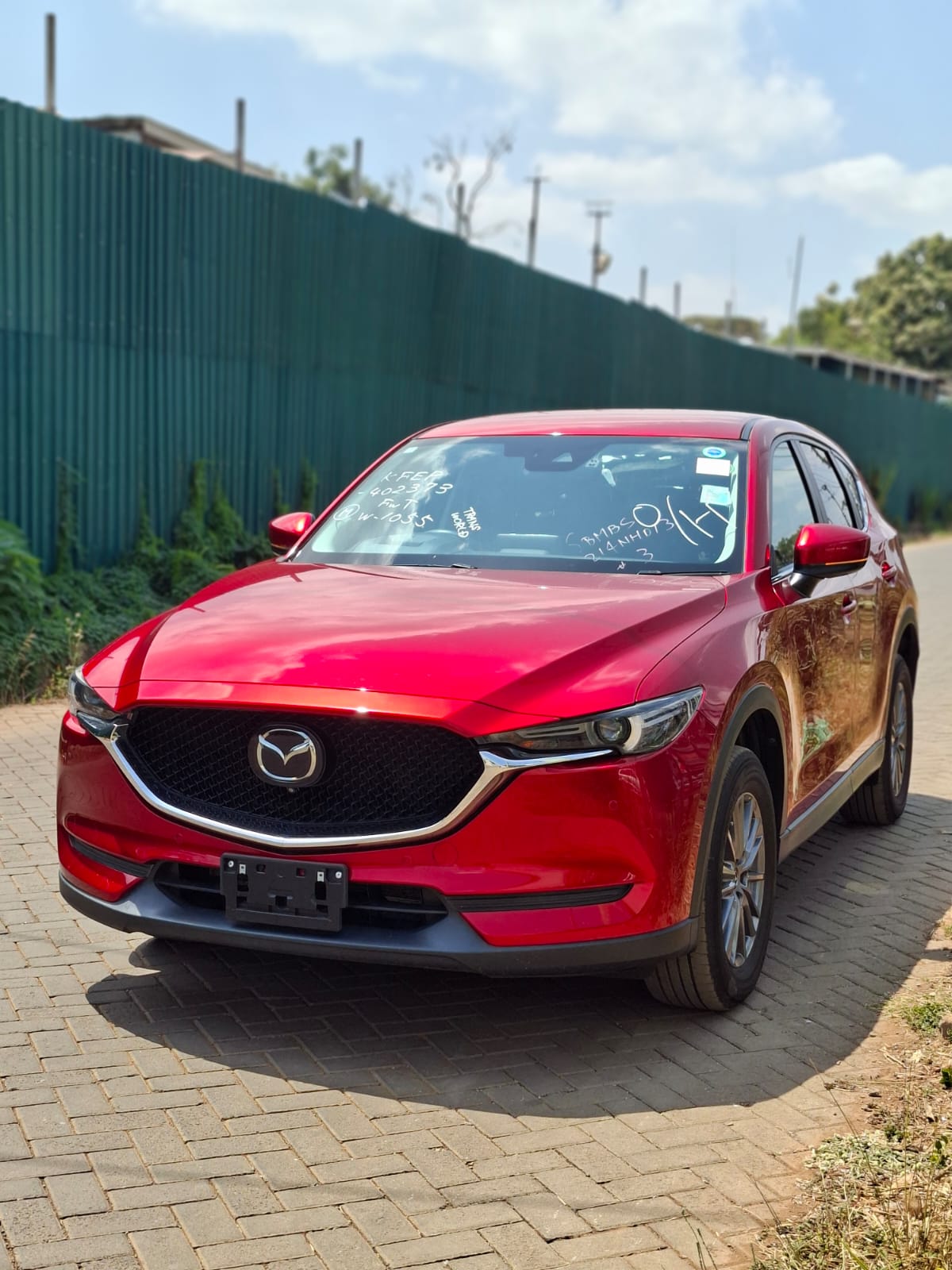
🚘 2019 MAZDA CX-5 AWD — PREMIUM & POWERFUL! 🔥
Looking for a stylish, comfortable and capable SUV? The 2019 Mazda CX-5 AWD delivers an excellent combination of performance, comfort and advanced features. ✅ 2500cc Petrol Engine✅ All-Wheel Drive (AWD)✅ Power Leather Seats✅ Powered Tailgate…
Mitsubishi Outlander | 2020 Model
🚗Mitsubishi Outlander | 2020 Model✅ 2400cc Petrol Engine✅ 18” Mitsubishi alloy rims✅ Black premium fabric upholstery✅ Powered and heated front seats✅60:40 split folding rear seats✅Electronic parking brake and auto hold function✅Heated 4 spoke heated leather…
The Mazda Demio — Kenya’s Budget Hybrid Discovery That More Buyers Should Know About
📅 Category: Car Spotlights | By: Clyde Motors KE | ⏱ 4 min read Ksh 500,000 – Ksh 1,000,000 — Toyota Axio, Toyota Probox, Nissan Note, Mazda Demio, Honda Fit Hybrid. This is Kenya's most…